১০ই বৈশাখ, ১৪৩৩ বঙ্গাব্দ|
২৩শে এপ্রিল, ২০২৬ খ্রিস্টাব্দ|
৬ই জিলকদ, ১৪৪৭ হিজরি|
বিকাল ৩:২১|
গ্রীষ্মকাল|

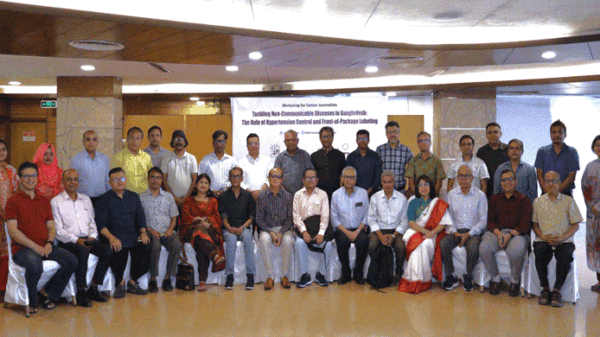
Staff Reporter, Dhaka : The risk of non-communicable diseases (NCDs), including hypertension, diabetes, and cancer is significantly increasing due to the excessive consumption of unhealthy ultra-processed foods, high in sugar, salt (sodium), saturated fats, and trans fats. According to the World Health Organization (WHO), approximately 71% of all deaths in Bangladesh are caused by non-communicable diseases. The introduction of Front-of-Package Labelling (FOPL) on packaged foods has been identified as an effective strategy to curb diet-related NCDs. In addition, ensuring uninterrupted supply of medicines for all is a crucial step in addressing hypertension-related NCDs. These observations were shared by speakers today (April 23) at a workshop for senior journalists on “Tackling Non-Communicable Diseases in Bangladesh: The Role of Hypertension Control and Front-of-Package Labelling,” held at FARS Hotel & Resorts in the capital. The workshop was organized by PROGGA (Knowledge for Progress) with support from the Global Health Advocacy Incubator (GHAI). A total of 28 senior journalists from print, television, and online media houses participated in the workshop.
The workshop highlighted that nearly 97% of people in Bangladesh regularly consume packaged foods. However, the complex nutritional information provided on the back of packets is often difficult for consumers to understand and the accurate amounts of salt, sugar, saturated fat, and trans-fat are frequently not clearly stated. As a result, consumers make food choices without a clear understanding about the nutritional value and associated health risks. The introduction of mandatory FOPL would allow consumers to easily identify unhealthy products through clear “Excess in” warning labels displayed on the front of the packets. This would allow consumers to make more informed and healthier food choices. Consequently, it would promote healthier dietary habits and encourage food manufacturers to improve the nutritional quality of their products.
It was also informed at the workshop that 44 countries worldwide have already implemented FOPL as an effective and best-buy public health intervention recommended by the WHO, of which 10 have made it mandatory. These initiatives have led to positive changes in consumer food choices, and a reduction in the consumption of unhealthy foods.
Speakers further pointed out that despite the alarming prevalence of NCDs, including hypertension in Bangladesh, budget allocation for this sector remains highly inadequate-accounting for only 4.2% of the total health budget. As a result, uninterrupted supply of anti-hypertensive medicines cannot be ensured at all Community Clinics. Ensuring sustainable financing and a regular supply of medicines at Community Clinics and Upazila Health Complexes could lead to significant progress in controlling hypertension and other non-communicable diseases.
Professor Dr. Sohel Reza Choudhury, Head of the Department of Epidemiology and Research, National Heart Foundation Hospital and Research Institute; Muhammad Ruhul Quddus, Bangladesh Country Lead, Global Health Advocacy Incubator (GHAI); Mortuza Haider Liton, Convener, Anti-Tobacco Media Alliance (ATMA); Nadira Kiron and Mizan Chowdhury, Co-Conveners, Anti-Tobacco Media Alliance (ATMA); and ABM Zubair, Executive Director, PROGGA were present at the workshop as discussants. The open discussion session was facilitated by Reaz Ahmad, Editor, Dhaka Tribune. Thematic presentations were delivered by PROGGA’s Program Officers, Samiha Bintay Kamal and Shabnam Mostofa.