১৯শে মাঘ, ১৪৩২ বঙ্গাব্দ|
২রা ফেব্রুয়ারি, ২০২৬ খ্রিস্টাব্দ|
১৪ই শাবান, ১৪৪৭ হিজরি|
সন্ধ্যা ৭:১২|
শীতকাল|

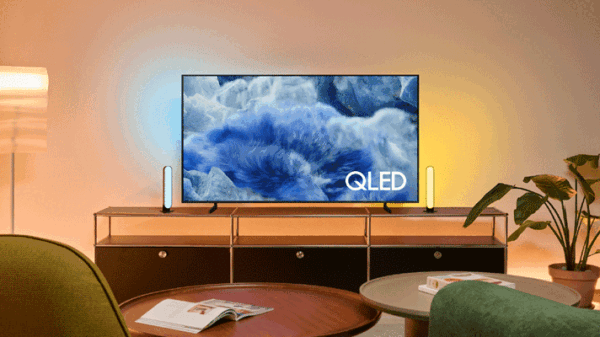
Staff Reporter, Dhaka : Buying a TV has never been more confusing than it is today. Many brands, including leading ones, offer a wide range of models with different features. Among these, TV display technologies stand out the most. These mainly include variations of LCD, LED, Mini-LED, QLED, and OLED, with newer contenders such as QD-OLED and MicroLED. In fact, all of these versions offer distinct picture quality, brightness, contrast, and price points. However, it is crucial to distinguish between these display types, as each has its own advantages and drawbacks.
Leading screen manufacturers have turned to Quantum Dots, which are tiny, human-made microparticles with semiconductor properties. The size of each particle dictates the wavelength and color of light it emits. Whenever Quantum Dots are exposed to a light source or electricity, they emit colors of a specific bandwidth, which allows TVs to display billions of color shades instead of washed-out tones. It gives viewers more lifelike, natural looks, even in sunlight and reflections. Animation and sports look vibrant and enhance detail in dark scenes while watching movies or playing games.
LCD technology uses Cold Cathode Fluorescent Lamps (CCFLs) for backlighting and relies on a passive light source. On the contrary, LED is an improved version of LCD that uses light-emitting diodes and a liquid crystal panel instead of fluorescent lamps, providing a clear image even in bright environments.
Before LED came to market, LCD was the best choice for consumers, and with LED’s arrival, display technology eventually improved in quality. It gave brighter and more vibrant colors with a better contrast, whereas LCD monitors may look slightly dull to the viewers and have less contrast with limited color accuracy.
The latest Quantum Dot (QD) tech uses blue LED light with quantum dots for color. It offers consistent, vivid colours with no fading and reduces eye fatigue during long viewing sessions like studying, gaming, or watching movies.
In terms of price, Quantum Dot TVs are generally sold at a lower cost than OLED TVs. They are considered superior to traditional LCDs due to their ultra-thin designs and improved contrast performance, while their relatively affordable pricing makes them accessible to a broader audience. Additionally, quantum dot-enhanced LED TVs typically offer a longer lifespan than OLEDs.
Many brands in the market claim to offer high-quality QLED TVs, but in reality, many of these models fail to meet minimum health and environmental safety standards. Moreover, such self-proclaimed QLED TVs are often found to be of poor quality, use substandard materials, and lack an authentic Quantum Dot layer. This results in dimmer images, muted colors, and reduced definition. The authenticity of the technology used in manufacturing these TVs is what matters most.
In the end, beyond authenticity, the well-being of human health and the environment is paramount. International testing of each TV model has become more important than ever, as consumers are increasingly conscious of health and environmental concerns. Most TV brands lack certification from recognized international testing authorities, offering no real guarantee of product quality. Certification from respected organizations such as TÜV Rheinland, the German authority, widely assures quality and safety. However, only a few TVs, such as Samsung’s Real QLED TVs, carry this prestigious certification.